About Me
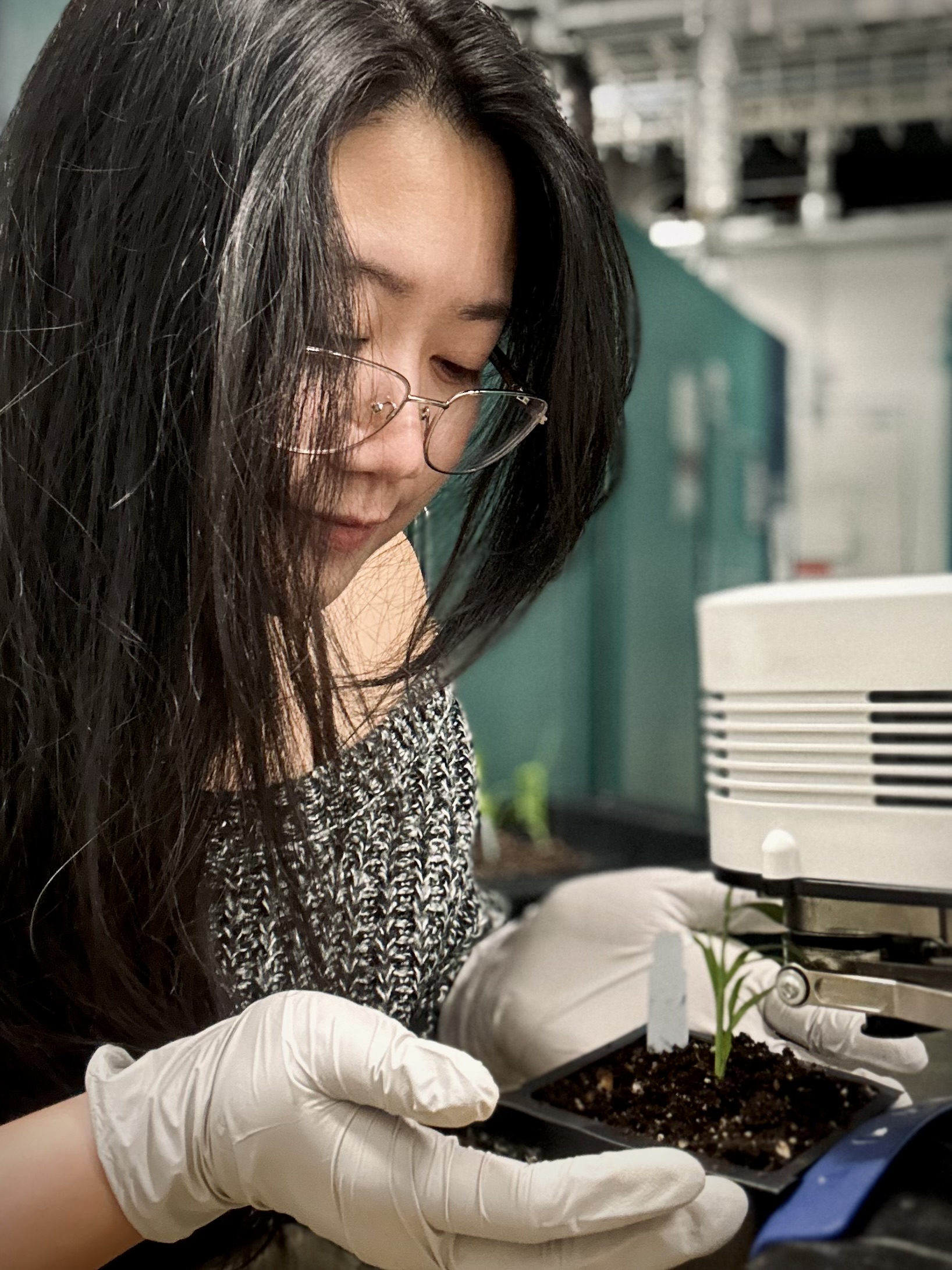
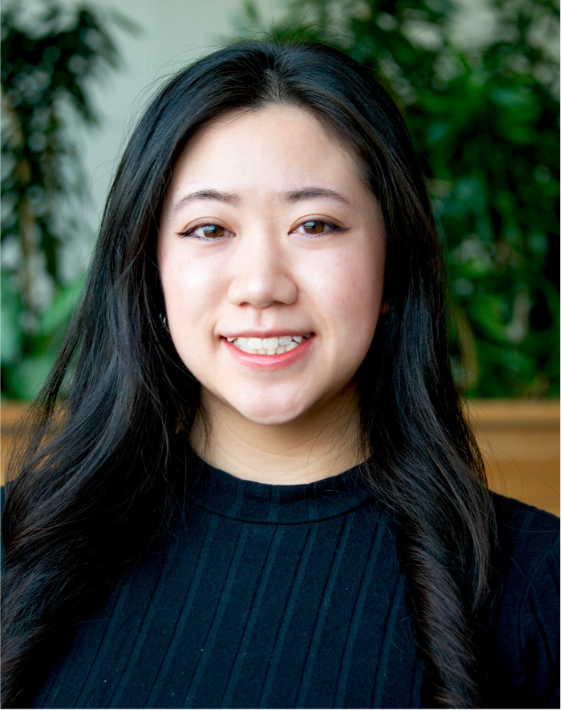
I am a PhD student in the Ecology and Evolutionary Biology program at the University of Connecticut, studying plant stress response in CAM plants with Dr. Karolina Heyduk.
My admiration for the natural world fuels my desire to understand plant resilience and stress tolerance, and I have a special place in my heart for "weird" plants.
I've come to believe that all plants have their own secrets and hold a part of the answer to understanding life's mysteries. Feel free to check out my journey in science and my current work.
As a first-generation, Asian-American, woman in STEM, and Bonner Scholar Alumni, I am committed to supporting participation, promoting public accessibility, and fostering belonging and community in science.
My Journey
Growing Up

Overcoming adversity has been a dominant theme in my story long before I was born and I grew up surrounded by powerful examples of resilience. My sisters and I were raised in the suburbs outside of Washington, D.C, and witnessing the experiences of my immigrant parents instilled in me an intrinsic appreciation for the power of perseverance.
However, it wasn't until an elementary school field trip to the Smithsonian Museum of Natural History that I was captivated by life's ability to survive - and thrive - in even the harshest environments.
I have been following my passion in the life sciences ever since.
Yes, I am the one with the crazy hair, trying to eat a pinecone with a flower on top.
The University of Richmond
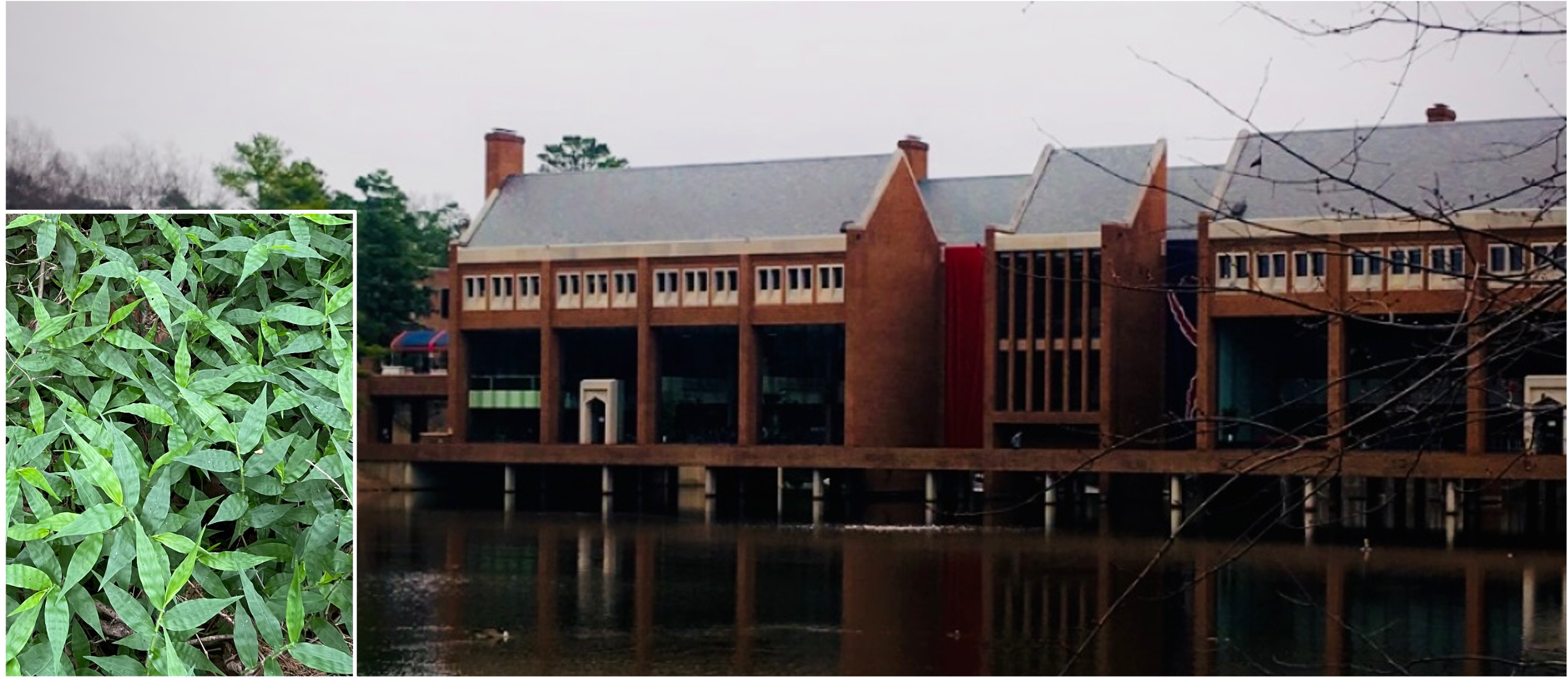
At the University of Richmond, VA, I was drawn to Dr. Carrie Wu’s lab, where I studied local adaptation and speciation in plants. I joined to learn how to do research using plant systems, and there I investigated potential mechanisms contributing to the success of wavyleaf basketgrass (Oplismenus undulatifolius), an invasive species in U.S. Mid-Atlantic forest understories.
Since wavyleaf basketgrass is a newly recognized high-risk invasive species, not much is known about its basic biology or how it is rapidly expanding its invasive range. For example, this invasive grass was known to be shade tolerant, but there were no studies that experimentally tested how large a role light had on its invasion success. To fill the knowledge gap, I conducted an independent research project that explored how light may affect the geographic distribution of wavyleaf basketgrass at the seed stage.
I examined variation in germination rate across time, under different light intensities using shade structures I designed and built. My results suggested wavyleaf basketgrass had the capacity to form long-term seed banks and seed germination was not significantly impacted by high light intensity.
I also met with state park rangers and a biologist from the Virginia Department of Conservation and Recreation to discuss how the results of my study could inform their invasive species management practices.
Wavyleaf basketgrass range was previously thought to be restricted to forest understories and it was incredible to hear that they were expanding their search radius beyond shady areas based on my results, and indeed found plants thriving in unshaded patches.
Our conversations were truly memorable because I could see that my research had real impacts on conservation efforts. The application of my results, the fruits of my labor, excited me and reinforced my motivation to conduct meaningful science.
Pham & Wu, 2023 Invasive Plant Science and Management.
The Rocky Mountain Biological Lab
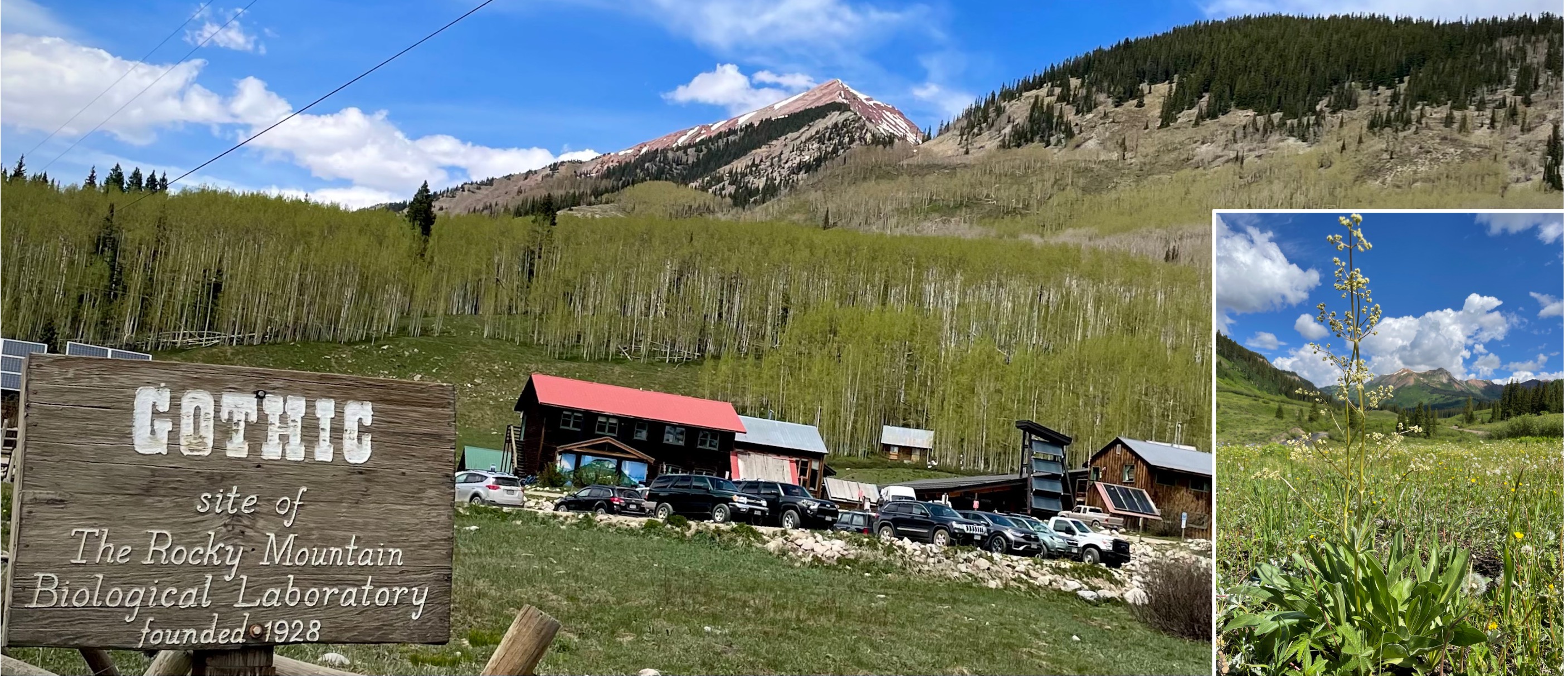
To gain more experience in plant science research, I applied to a Summer Undergraduate Education Program at the Rocky Mountain Biological Laboratory (RMBL), in Gothic, CO, and completed 10 weeks of research in the Summer of 2022.
Under the guidance of Dr. Will Petry, I conducted an independent research study looking at labile sex-expression in edible valerian (Valeriana edulis), a dioecious, long-lived, and alpine perennial plant.
To do so, I examined flowering plants in populations over a broad elevational gradient (2040m-3650m) to determine the degree, frequency, and variation in expression of male plants with partial to fully developed stigmas.
I used remote sensing datasets and demographic surveys to test potential environmental factors. To analyze and present the data more effectively, I taught myself R and Geographic Information Systems (GIS).
I found that incidence of anatomical male inconstancy was exceedingly high, and that none of the candidate factors (plant size, temperature, soil moisture, and operational sex-ratio) had an effect on the variation of this phenotype. My study was the first to document the phenomena of “leaky” dioecy in V. edulis, and reinforced the sense of excitement I have for research on the frontier of discovery.
The experience was both rewarding and validating as I persisted to see my project through to completion, overcame new challenges, and lived among and connected with others in the broader scientific community. I truly loved my time at RMBL.
Pham, 2022 RMBL Publications Database.
The Danforth Plant Science Center
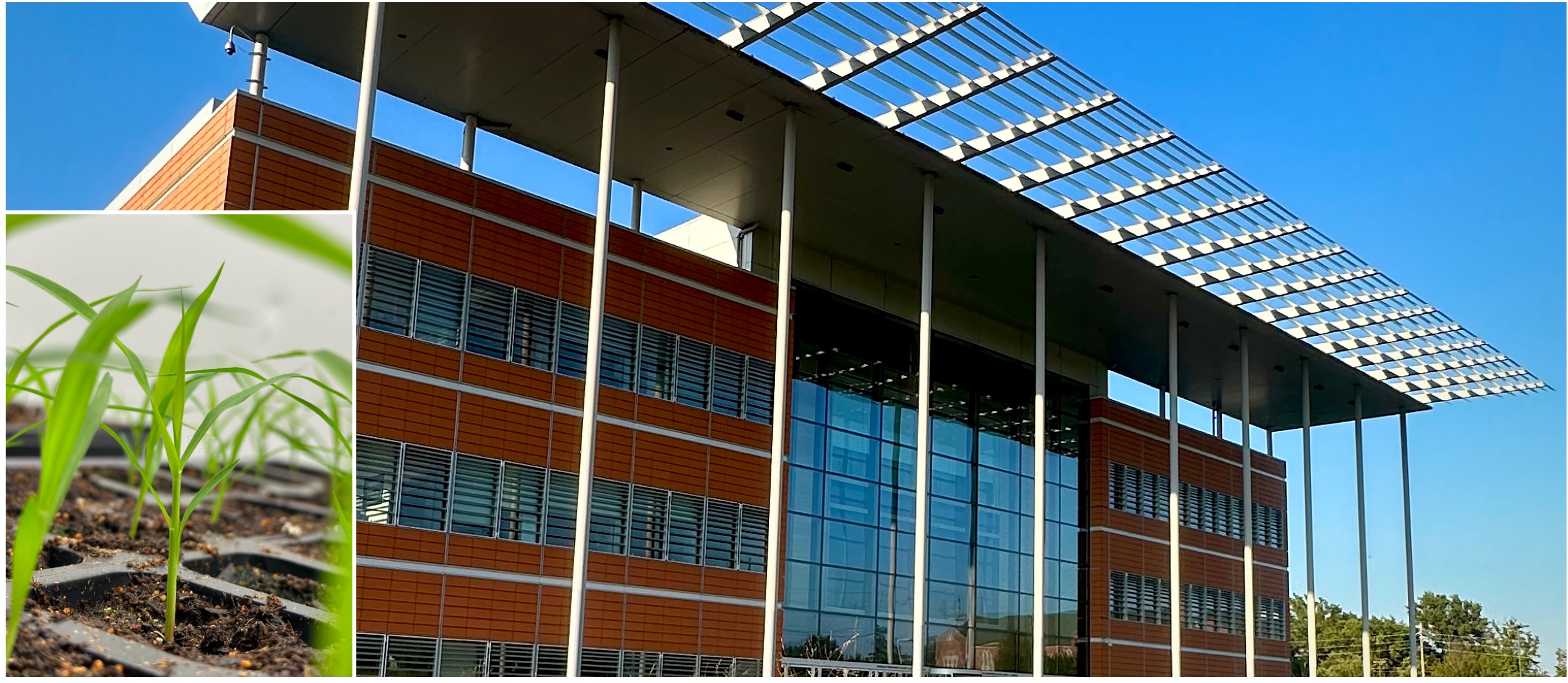
After obtaining my bachelor's degree, I wanted to further explore different disciplines in the botanical sciences and delve deeper into my interest in plant stress responses and adaptations before applying to a graduate program.
So, I joined Dr. Ru Zhang’s photosynthesis lab at the Donald Danforth Plant Science Center, St. Louis, MO, where I honed my scientific capabilities as a full time research technician. I diversified my knowledge and technical skill set by evaluating photosynthesis with the LI-6800, operating deep water culture hydroponic systems, and incorporating high-resolution microscopy, such as confocal imaging, into my research.
I also learned to work with different photosynthetic organisms, such as the green model alga Chlamydomonas reinhardtii, lettuce, soybean, tomato, and green foxtail (Setaria viridis).
One of my main projects sought to quantify reactive oxygen species (ROS) in a C4 model plant using ROS probes and advanced bioimaging techniques to study high light adaptation. I optimized a protocol to study stress response using ROS in a C4 plant, and also found that green foxtail acclimated to my increase in light intensity in two days. During this research experience, I renewed my passion for discovery with the intention to improve the human condition through plant science.
My work also contributed to a paper investigating photoprotection mechanisms through non-photochemical quenching pathways in Setaria viridis.
The University of Connecticut
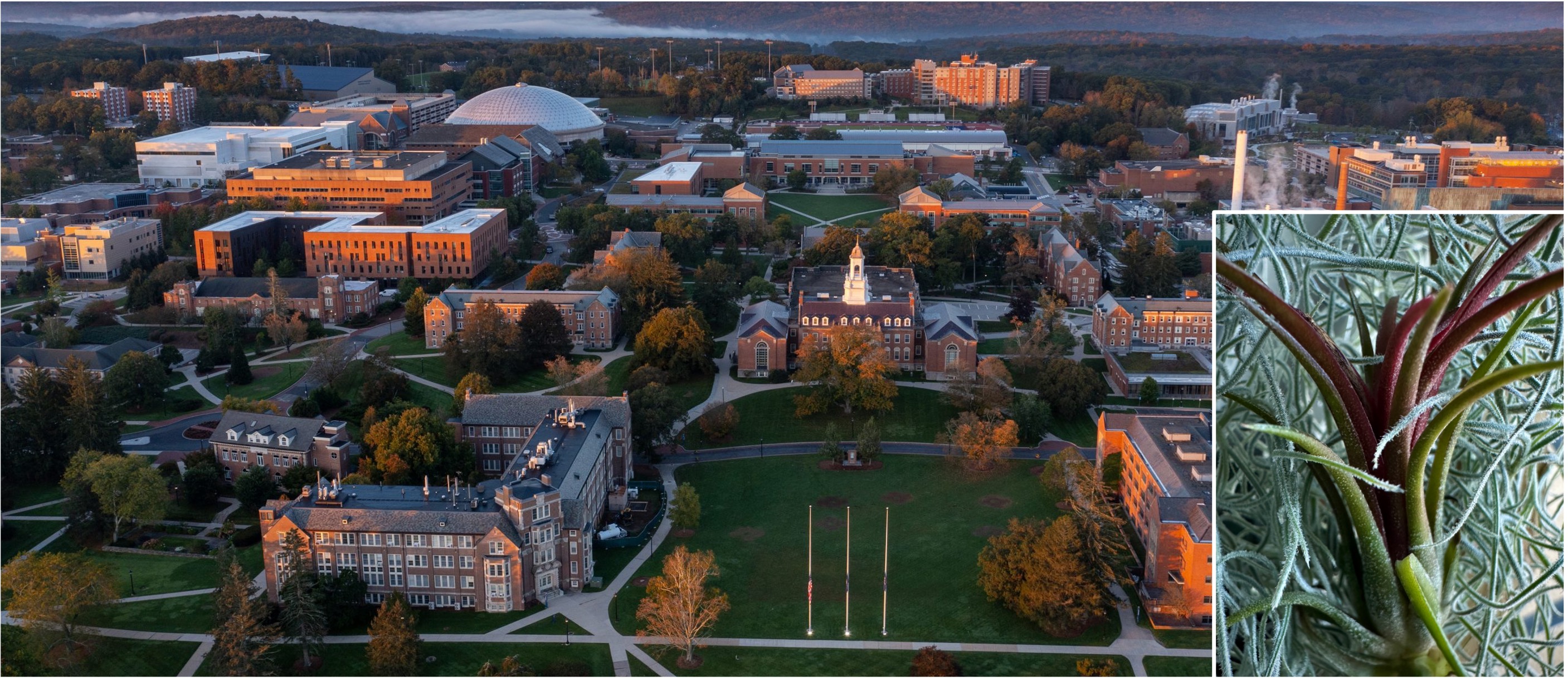
I intend to continue studying plant behavior and their interaction with the environment under the mentorship of Dr. Karolina Heyduk at the University of Connecticut, Storrs, CT.
As a PhD student here, I am interested in investigating how CAM plants respond to subsequent stress events over different generations. Ultimately, I hope my research will contribute to solving major challenges, such as understanding plant response to environmental stress to develop resilient crops and ensure food security under fluctuating climates.
Interested in learning more? Check out my current research.
Current Research
Drought Stress Memory
in CAM Epiphytes

Plants get thirsty too, and not having enough water is very stressful!
Broadly, I am interested in understanding how plants respond to multiple stress events and how stress memory may affect their behavior. How do plants "remember" past stress events, how long does this memory last, and can it affect future generations?
I study epiphytic CAM plants, since they are interesting, resilient plants that frequently experience drought. Crassulacean Acid Metabolism (CAM) is a specialized photosynthetic pathway thought to have evolved numerous times as an adaptation to combat water limitation.
In the CAM pathway, plants open their stomata at night to take up CO2 and temporarily stored it in a different form overnight. During the day, the stored carbon is converted back to CO2 and released around Rubisco, the enzyme that produces sugar for the plant to use as energy.
This allows CAM plants to be more drought tolerant and increase the efficiency of Rubisco. Water does not escape from open stomata during warmer daytime temperatures, reducing evapotranspiration. Surrounding Rubisco with high concentrations of CO2 also increases its efficiency.
Many epiphytes are CAM plants, but not all CAM plants are epiphytes. Epiphytic plants (e.g., air plants, orchids, etc) are often found in exposed habitats. Since they grow on other plants and do not root in soil, they lack access to soil based water sources and experience frequent periods of drought in their natural habitats.
So, it is likely CAM epiphytes have unique methods of dealing with reoccuring drought stress and I am interested in exploring these mechanisms and how this ability may contribute to broader patterns.
This is a work in progress, so I am looking forward to what I will find!
Contact
Elements
Text
This is bold and this is strong. This is italic and this is emphasized.
This is superscript text and this is subscript text.
This is underlined and this is code: for (;;) { ... }. Finally, this is a link.
Heading Level 2
Heading Level 3
Heading Level 4
Heading Level 5
Heading Level 6
Blockquote
Fringilla nisl. Donec accumsan interdum nisi, quis tincidunt felis sagittis eget tempus euismod. Vestibulum ante ipsum primis in faucibus vestibulum. Blandit adipiscing eu felis iaculis volutpat ac adipiscing accumsan faucibus. Vestibulum ante ipsum primis in faucibus lorem ipsum dolor sit amet nullam adipiscing eu felis.
Preformatted
i = 0;

while (!deck.isInOrder()) {
    print 'Iteration ' + i;
    deck.shuffle();
    i++;
}

print 'It took ' + i + ' iterations to sort the deck.';
Lists
Unordered
- Dolor pulvinar etiam.
- Sagittis adipiscing.
- Felis enim feugiat.
Alternate
- Dolor pulvinar etiam.
- Sagittis adipiscing.
- Felis enim feugiat.
Ordered
- Dolor pulvinar etiam.
- Etiam vel felis viverra.
- Felis enim feugiat.
- Dolor pulvinar etiam.
- Etiam vel felis lorem.
- Felis enim et feugiat.
Icons
Actions
Table
Default
| Name |
Description |
Price |
| Item One |
Ante turpis integer aliquet porttitor. |
29.99 |
| Item Two |
Vis ac commodo adipiscing arcu aliquet. |
19.99 |
| Item Three |
Morbi faucibus arcu accumsan lorem. |
29.99 |
| Item Four |
Vitae integer tempus condimentum. |
19.99 |
| Item Five |
Ante turpis integer aliquet porttitor. |
29.99 |
|
100.00 |
Alternate
| Name |
Description |
Price |
| Item One |
Ante turpis integer aliquet porttitor. |
29.99 |
| Item Two |
Vis ac commodo adipiscing arcu aliquet. |
19.99 |
| Item Three |
Morbi faucibus arcu accumsan lorem. |
29.99 |
| Item Four |
Vitae integer tempus condimentum. |
19.99 |
| Item Five |
Ante turpis integer aliquet porttitor. |
29.99 |
|
100.00 |